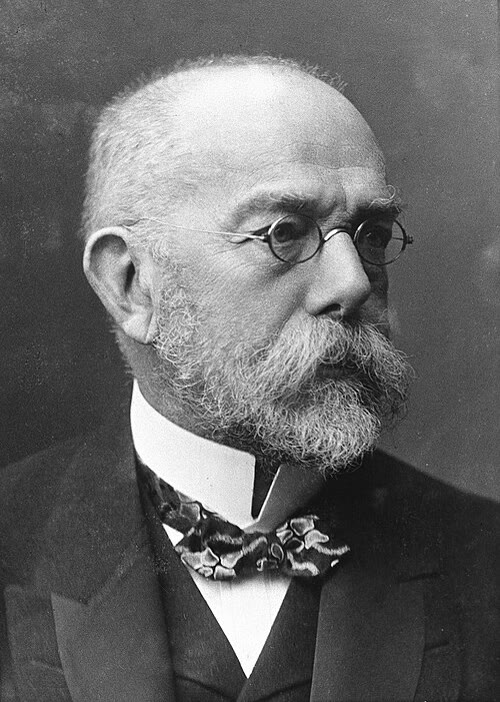
Robert Koch
रोबर्ट कोच
German physician, bacteriologist (1843–1910)
नेपालीमा पढ्नुहोस् · हिंदी में पढ़ें
- नेपाली · English · हिंदीRead in your language
- CitedEvery fact sourced
- Ad-freeNo ads, no tracking
Heinrich Hermann Robert Koch ( KOKH; German: [ˈʁoːbɛʁt kɔx] ; 11 December 1843 – 27 May 1910) was a German physician and microbiologist. He won the 1905 Nobel Prize in Physiology or Medicine "for his investigations and discoveries in relation to tuberculosis".
Quick facts
Awards wd
- Pour le Mérite for Sciences and Arts order
- Nobel Prize in Physiology or Medicine (1905)
- honorary citizen of Berlin
- Bavarian Maximilian Order for Science and Art (1909)
- honorary citizen of Clausthal-Zellerfeld
- Grand Cross of the Order of the Red Eagle
- Foreign Member of the Royal Society (1897)
- honorary member of the Physics Association (Frankfurt am Main, Germany) (1889)
About
As the discoverer of the specific causative agents of deadly infectious diseases, including tuberculosis, cholera, and anthrax, he is regarded as one of the main founders of modern bacteriology. As such, he is popularly nicknamed the father of microbiology (with Louis Pasteur), and as the father of medical bacteriology. His discovery of the anthrax bacterium (Bacillus anthracis) in 1876 is considered the birth of modern bacteriology. Koch used his discoveries to establish that germs "could cause a specific disease" and directly provided proofs for the germ theory of diseases, therefore creating the scientific basis of public health, saving millions of lives. For his life's work, Koch is seen as one of the founders of modern medicine.
While working as a private physician, Koch developed many innovative techniques in microbiology. He was the first to use the oil immersion lens, condenser, and microphotography in microscopy. His invention of the bacterial culture method using agar and glass plates (later developed as the Petri dish by his assistant Julius Richard Petri) made him the first to grow bacteria in the laboratory. In appreciation of his work, he was appointed as the government advisor at the Imperial Health Office in 1880, promoted to a senior executive position (Geheimer Regierungsrat) in 1882, Director of Hygienic Institute and Chair (Professor of hygiene) of the Faculty of Medicine at Berlin University in 1885, and the Royal Prussian Institute for Infectious Diseases (later renamed Robert Koch Institute after his death) in 1891.
The methods Koch used in bacteriology led to the establishment of a…
People also search for
 Alexis Carrel
 Barbara McClintock
 Carol W. Greider
 Charles Louis Alphonse Laveran
 Elizabeth Blackburn
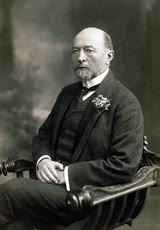 Emil von Behring
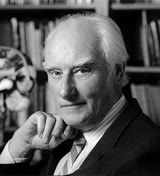 Francis Crick
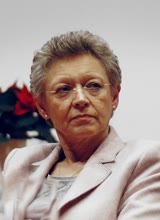 Françoise Barré-Sinoussi
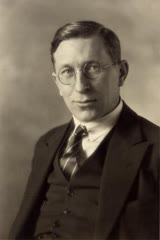 Frederick Banting
 Gertrude B. Elion
 Gerty Cori
 Har Gobind Khorana
Questions
- When was Robert Koch born?
- Robert Koch was born on 11 December 1843 in Clausthal.
- Where did Robert Koch study?
- Robert Koch was educated at University of Göttingen.
Sources
- Wikipedia (English): Robert Koch · CC BY-SA 4.0
- Wikipedia (Nepali): रोबर्ट कोच · CC BY-SA 4.0
- Wikidata item Q37193 · CC0 1.0
- Image: RobertKoch cropped.jpg by Unknown author Unknown author (Public domain)

Last updated · facts checked 21 November 2026
Cite this page
"Robert Koch". DigiNepal. Last updated 31 October 2026. https://diginpl.com/people/robert-koch. Retrieved 21 November 2026.
Is this you, or do you work in this person's office? Claim this profile